1.4.

Happy Easter! Enjoy the holiday 🙂
Homework (HW):
  None

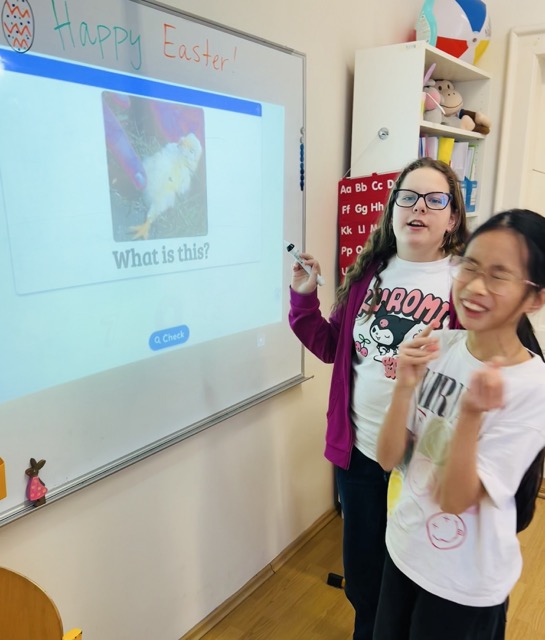
Vocabulary: lamb, chick, tulip, daffodil, nest, bonnet, basket

Easter activities:

-Word search, jumble, riddle; quiz game: https://www.baamboozle.com/game/973326
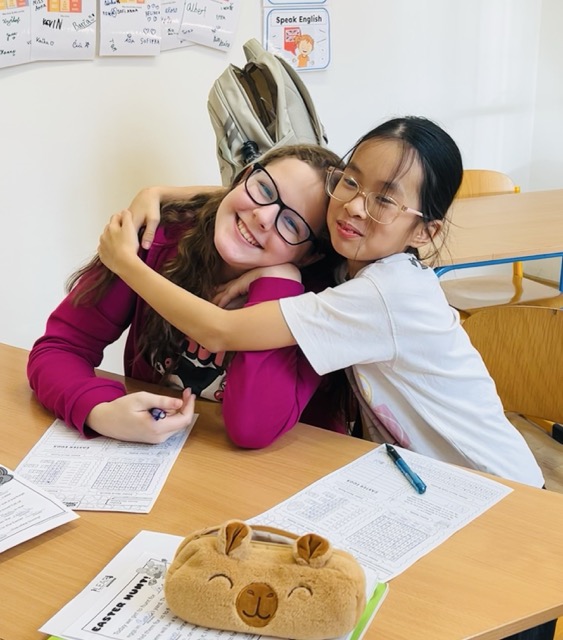
-„Easter Hunt“ and „Chocolate Bunny“ stories. Students created their own silly stories by first writing words based on prompts (parts of speech, e.g., adjective, noun, verb) without looking at the story and then filling in the story’s gaps. „Easter Hunt“ is below!
25.3.


Homework (HW):  AB 63/5, 6
Portfolio: Sentence Scrambles
Pupil’s Book: Units 5 and 6 Review (pages 62-63)
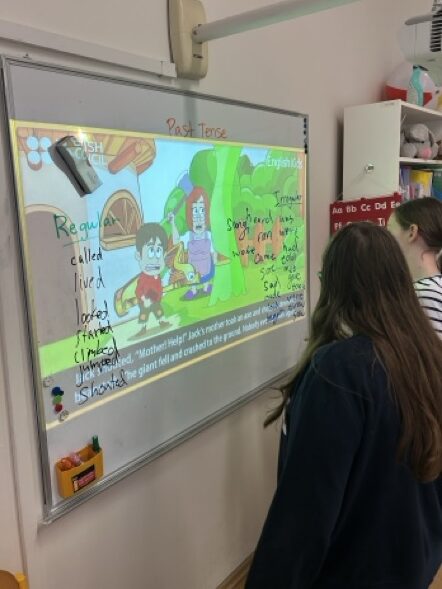
Special Story: „Jack and the Beanstalk“ – Students completed vocabulary and comprehension exercises including „What other magic things do you think the giant had in his castle? What are they made of? Write and draw.“
Vocabulary and Grammar: All from Units 5, 6
From „Jack and the Beanstalk“: hen, giant, harp, axe, beanstalk; Past simple regular and irregular verbs
Activity Book: 62, 63/4

11.3.

Homework (HW):  AB 57 (whole page)
Pupil’s Book: Unit 6 „Senses“ (pages 57-59)
Vocabulary and Grammar:
Senses:
hearing, sight, smell, taste, touch
Describing sensations: What does it look/feel/taste/smell/sound like? It looks/feels/tastes/smells/sounds like…
Cooking: flour, salt, pepper, knife, fork, spoon, plate, salami, sausage, onion, delicious, yeast, mix, dough, base, olives, oven, ingredient, topping
Sentence Stress: We talked about how stressing particular words changes the meaning of a sentence. (THIS is my toy spider. This is MY toy spider. This is my TOY spider. This is my toy SPIDER.)
Role Play: Ordering a pizza
Activity Book: 58/1, 2
Unit Song: PB 57
Diggory Bones Story: PB 59
Chain game: On our pizza, there’s…. (say a topping, and the next student must say the first student’s topping, and add theirs on).

Brain Break: Would You Rather? Workout! (Pizza Edition) Family Fun Fitness – Brain Break – This or That

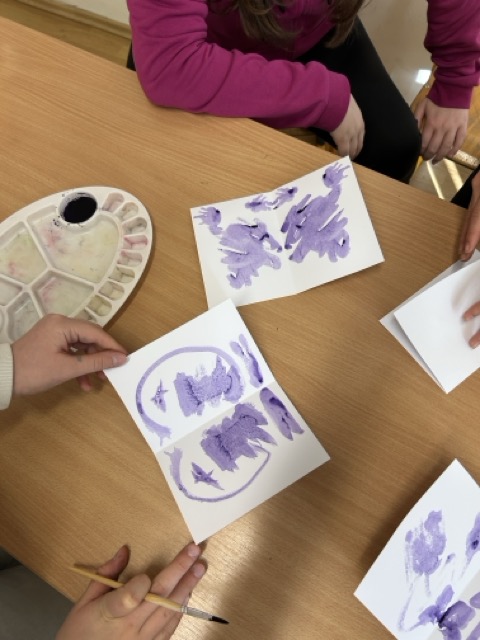
Make your own Rorschach Test: Students made their own tests with paint and paper. We all shared our opinions about what it looked like.

4.3.

Homework (HW):  AB 56 (whole page). In Activity 2, the last letter of one word is the first letter of the next word. chips, salt, taste…
Pupil’s Book: Unit 6 „Senses“ (pages 54-56)
Vocabulary and Grammar:
Senses:
hearing, sight, smell, taste, touch
Describing sensations: What does it look/feel/taste/smell/sound like? It looks/feels/tastes/smells/sounds like…
Cooking: flour, salt, pepper, knife, fork, spoon, plate, salami, sausage, onion, delicious, yeast, mix, dough, base, olives, oven, ingredient, topping
Activity Book: 54
Unit Song: PB 57
Game: What does it sound like? (PB 55/3) On slips of paper, students wrote 3 things that make different sounds. E.g. clock. (tick tock tick tock). We took turns drawing a slip, making the sound, and guessing.

25.2.

Today we had the Units 3-5 Test. Good job, everyone! There is no homework for next week. 🙂


After the test, we played a fun and interactive „Beat the Maze“ game focused on time vocabulary. Students had to answer multiple-choice and open-ended questions about months, seasons, dates, daily routine, etc., to successfully exit the maze.

We also practiced some English tongue twisters:

  • Sally sells seashells by the seashore.
  • A big black bug bit a big black bear.
  • Red leather, yellow leather, red leather, yellow leather.
  • Fuzzy Wuzzy was a bear. Fuzzy Wuzzy had no hair. Fuzzy Wuzzy wasn’t fuzzy, was he?
  • Peter Piper picked a peck of pickled peppers.
  • A proper copper coffee pot.
  • Fresh fried fish.
  • Kitty caught the kitten in the kitchen.

11.2.

Units 3-5 Test on 25.2.
Homework (HW):
  Unit 4 Reinforcement Worksheet
Pupil’s Book: Unit 5 (pages 52-53); Review Units 3-5
Today we reviewed Units 3, 4, and 5. Students also imagined they were sculptors and designed their own sculptures from recycled materials.
Vocabulary and Grammar: Units 3-5
Unit 5: Materials: brick, sugar, rubber, fur, wool, paper, card, plastic, wood, stone, grass, leather, gold, silver, glass metal; made of, comes from
Unit 4: Disaster: storm, island, beach, catch fire, lightning, tsunami, hurricane, iceberg
Unit 3: Directions: right, left, straight on, (at/on the) corner, past, across, along; to get lost, turn; Places in a city: police station, theatre, bridge, street, post office, taxi, hotel, airport, restaurant, museum, castle, prison, bank, stadium, gym
Activity Book: 53
Units 3 and 5 Songs
Games: Materials (Unit 5) Students said a sentence using the material and either „comes from“ or „is/are made of“, Units 3 and 4 Review

4.2.

Homework (HW):  AB 50/4, 51/Do you remember?
Pupil’s Book: Unit 5 „Material things“, pages 49-51
Vocabulary: Materials: brick, sugar, rubber, fur, wool, paper, card, plastic, wood, stone, grass, leather, gold, silver, glass metal
Pronunciation: connected speech. The final consonant sound and an initial vowel sound of two words link together (e.g. look at, come on, made of).
Grammar: „comes from“ e.g. Wool comes from sheep. Paper comes from trees.
„made of“ e.g. The eggs are made of white chocolate. The spider isn’t made of fur. What are they made of?
Activity Book: 49; 50/1, 2, 3; 51/1, 2
Unit Song: PB 49
Diggory Bones Story: PB 51
Games: The Yes/No Game (PB 50/4). One person thought of an object (from the pictures in the activity or something in the classroom) and the rest of the class asked questions that could be answered with „yes“ or „no.“ For example, „Is it smaller than a book?“ „Is it made of metal?“ „Do children play with it?“

28.1.

Homework (HW):  AB 47 (whole page)
Pupil’s Book: Unit 5 „Material things“, pages 46-48
Vocabulary: Materials: brick, sugar, rubber, fur, wool, paper, card, plastic, wood, stone, grass, leather, gold, silver, glass, metal
Grammar: „made of“ e.g. The eggs are made of white chocolate. The spider isn’t made of fur. What are they made of?
Activity Book: 46, 48
Unit Song: PB 49
Games:

-„What’s it made of?“ Each student got a “secret” material. They wrote 5 things in the room that are made of it. The others must guess the material.
-Sorting materials into two categories: natural and man-made.
https://www.baamboozle.com/game/3029371

21.1.

Today we had a special story lesson on The Smeds and the Smoos by Julia Donaldson. This book is about two groups of aliens, the red Smeds and the blue Smoos. It explores themes of prejudice, breaking down barriers, appreciating differences, and friendship.

Students predicted what would happen, listened to the story, and retold it in their own words. We also discussed these questions: Which part do you like? Is it okay to say “we don’t talk to them”? Who is right: the grandparents or the children? What happens when the grandparents visit different planets? What can we learn from this story? In what ways can people be different than us?

Finally, students wrote and drew pictures of their favourite part.

Vocabulary: different, same, planet, friendly, strict, accept, nasty